

When it comes to cooking the perfect hamburger, it’s all about hitting that sweet spot of temperature. Too low, and you’re serving up a rare treat that could make even the bravest foodie question their life choices. Too high, and you might end up with a hockey puck that could double as a doorstop. Finding the right temp is crucial for juicy, mouthwatering burgers that will have everyone coming back for seconds.
Understanding Hamburger Cooking Temperatures
Achieving the right cooking temperature for hamburgers ensures safety and enhances flavor. Proper temperatures contribute to a juicy and satisfying burger experience.
Importance of Proper Cooking Temperatures
Cooking hamburgers to the correct temperature is crucial for food safety. Ground beef must reach an internal temperature of 160°F to kill harmful bacteria such as E. coli and Salmonella. This temperature guarantees that burgers are safe to eat while maintaining their juiciness. Furthermore, cooking at appropriate temperatures helps to lock in flavors and moisture, creating an enjoyable dining experience. Ensuring burgers cook thoroughly avoids the risk of foodborne illnesses.
Common Temperature Myths
Many myths surround hamburger cooking temperatures. One misconception suggests that well-done burgers must reach 170°F, but 160°F is sufficient for safety without sacrificing tenderness. Another myth is that color indicates doneness. Instead, using a meat thermometer provides a reliable measure of internal temperature. Some believe cooking at high heat is the only option for flavor, but moderate temperatures yield a better buttery crust without drying out the meat. Rely on accurate measurements rather than assumptions for perfect burgers.
Recommended Cooking Temperatures
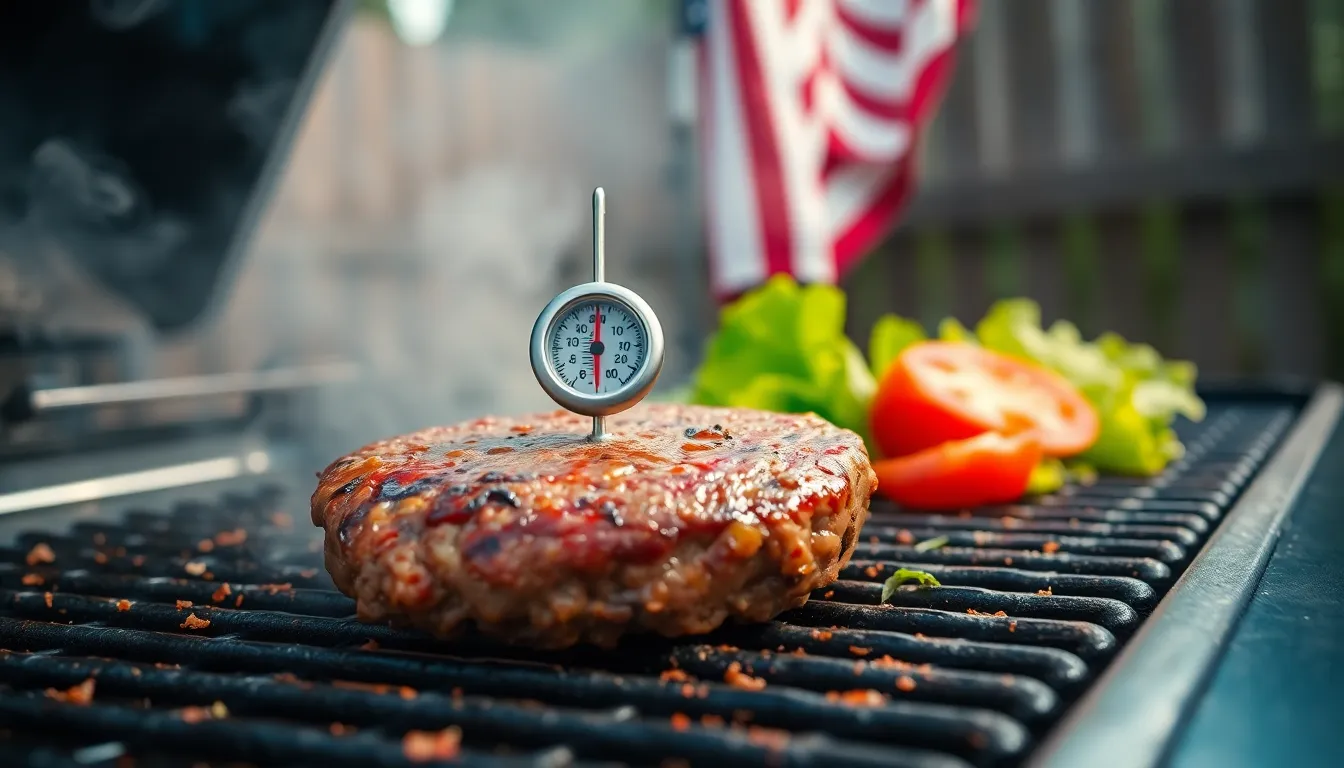
Achieving the right cooking temperature for hamburgers enhances flavor and ensures safety. Below are the recommended internal temperatures for various levels of doneness.
Medium-Rare
Cooking hamburgers to a medium-rare state requires an internal temperature of 130°F to 135°F. This temperature results in a warm, red center that retains juiciness and flavor. Chefs often prefer this temperature for its tenderness, providing a satisfying texture. To ensure accuracy, using a meat thermometer proves essential. At this level, the burger remains slightly rare, keeping moisture intact without compromising taste.
Medium
For hamburgers cooked medium, target an internal temperature of 140°F to 145°F. This doneness creates a pink center while ensuring the meat is cooked through. Medium burgers balance juiciness with a firmer texture. The flavor profile remains rich, providing a delightful eating experience. A thermometer aids in verifying the precise temperature, confirming that it’s done without drying the patty out.
Medium-Well
Aim for 150°F to 155°F for medium-well hamburgers. This temperature results in a mostly cooked through patty with only a slight hint of pink. While the juiciness decreases, the flavor remains vibrant. Many diners prefer medium-well for a slightly firmer bite, though it approaches dryness. Thorough cooking at this stage reduces the risk of foodborne illnesses, keeping safety a top priority.
Well-Done
Well-done hamburgers must reach an internal temperature of 160°F and above. At this point, the meat is fully cooked with no pink visible at the center. Dryness can occur, affecting the texture and flavor experience. Many consumers opt for well-done burgers for peace of mind regarding food safety. Always check with a thermometer to ensure an even cook, while still aiming for the best flavor profile.
Tools for Measuring Temperature
Accurate temperature measurement ensures hamburgers are cooked safely and to the desired doneness. Utilizing the right tools simplifies this process.
Instant-Read Thermometers
Instant-read thermometers provide quick and precise temperature readings. These devices penetrate the meat and display the internal temperature within seconds, making them ideal for checking hamburgers. A digital version offers easy readability, while an analog model typically features a dial. Both options accurately indicate doneness, ensuring that hamburgers reach at least 160°F for food safety. Some advanced models include features like backlit displays, which enhance usability in various lighting conditions.
Meat Thermometer Types
Several types of meat thermometers cater to different cooking methods. Digital probes remain popular due to their speed and accuracy. Leave-in thermometers, designed for extended cooking, stay in the meat while it cooks and continuously monitor the temperature. Infrared thermometers allow one to take surface temperature readings without direct contact, though they’re less accurate for internal temperatures. Selecting the appropriate thermometer type can optimize the cooking process, ensuring juicy, perfectly cooked hamburgers every time.
Tips for Cooking Perfect Hamburgers
Achieving perfect hamburgers requires attention to detail. Following a few key tips can make a significant difference.
Preparing the Patties
Focus on using ground beef with a fat content of 15% to 20% for maximum juiciness. Form patties slightly larger than the bun, as they shrink during cooking. Make a shallow indentation in the center of each patty to prevent puffing up. Season generously with salt and pepper before cooking for enhanced flavor. Allowing the patties to come to room temperature before cooking ensures even cooking throughout.
Cooking Methods
Choose between grilling, pan-frying, or broiling to cook hamburgers effectively. Grilling over medium-high heat provides a smoky flavor, while pan-frying on medium heat offers a crispy texture. Broiling achieves a similar effect as grilling but cooks from above, allowing for easier indoor preparation. Monitor the cooking temperature with a thermometer to achieve desired doneness. Flip the patties only once during cooking to maintain juices and prevent toughening.
Achieving the perfect hamburger requires attention to cooking temperature and technique. By understanding the ideal internal temperatures for different levels of doneness, cooks can create burgers that are not only safe to eat but also bursting with flavor. Using a meat thermometer is essential for accuracy and ensures that each burger is cooked to perfection.
With the right fat content and cooking methods, anyone can enjoy juicy and delicious hamburgers. Whether grilling, pan-frying, or broiling, keeping these tips in mind will elevate the burger experience. The combination of safety and taste is what makes a great hamburger truly satisfying.