
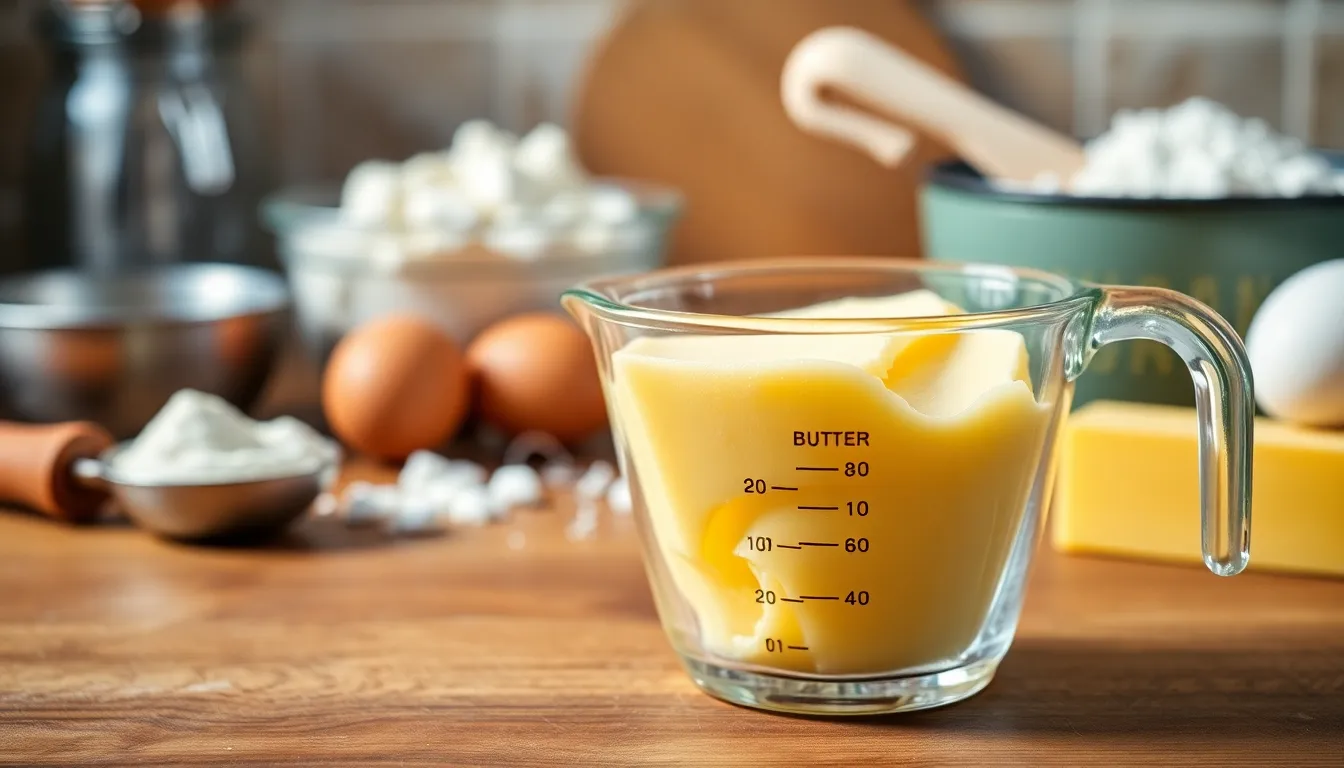
Butter lovers unite! Whether you’re baking a decadent cake or slathering it on warm toast, knowing how much butter you need can make or break your culinary masterpiece. But wait—how much butter is actually in one cup? It’s a question that’s puzzled many a home cook, and it’s time to clear the air.
Understanding Butter Measurements
Accurate butter measurements play a crucial role in cooking and baking. Grasping how volume and weight differ helps in better understanding butter’s use.
Volume vs. Weight
Volume measures the space butter occupies, while weight reflects its mass. One cup of butter equals approximately 227 grams. When baking, weight often matters more for precision. Some recipes specify butter in grams or ounces, which ensures accuracy, especially for delicate baked goods. Converting between volume and weight helps create successful outcomes, reducing the risk of dense or dry results.
Different Types of Butter
Different types of butter exist, each offering unique flavors and uses. Unsalted butter, commonly used in baking, allows for better control of salt levels in recipes. Salted butter adds flavor but might interfere with precise seasoning. European-style butter contains a higher fat content, resulting in a richer taste. Whipped butter incorporates air, yielding a lighter texture but reducing the total fat content. Understanding these distinctions improves recipe outcomes by providing the right choice for each culinary task.
Converting Butter Measurements
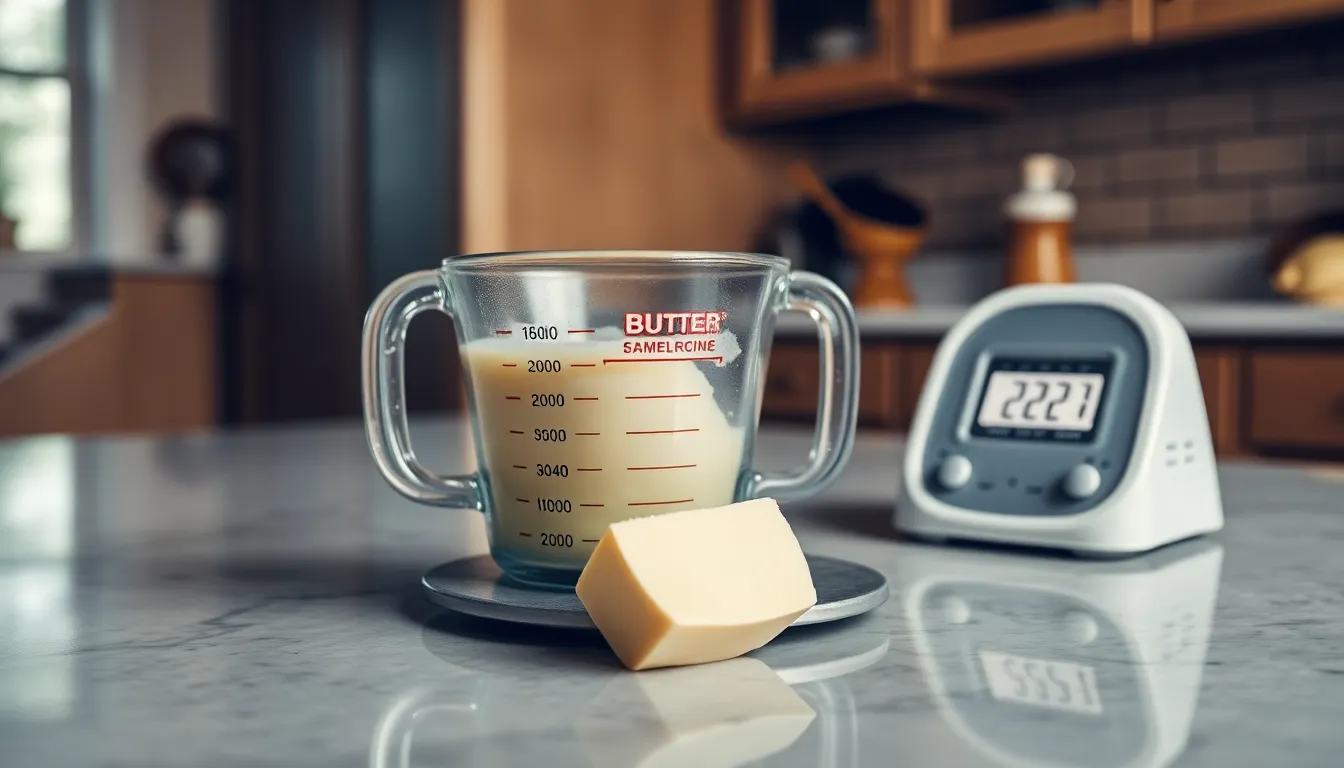
Accurate butter measurements play a crucial role in successful cooking and baking. Many methods exist to measure butter precisely, ensuring the desired results in recipes.
How to Measure Butter Accurately
Cutting butter sticks at marked lines simplifies measurement. Each stick typically contains eight tablespoons or half a cup. For recipes requiring a cup of butter, two sticks suffice. If using loose butter, a liquid measuring cup offers an alternative. Melt the butter for precise volume, ensuring the surface remains level. Weighing butter provides the most accuracy, especially for delicate recipes. Using a kitchen scale helps achieve exactly 227 grams for one cup.
Common Conversions for Butter
Understanding conversions enhances culinary confidence. One cup of butter equals 16 tablespoons. This means that two sticks of butter equate to one cup as well. If recipes call for three-quarters cup of butter, that corresponds to 12 tablespoons. Other conversions show that one stick equals half a cup or four ounces. For measuring in grams, remember that one cup comes to 227 grams. Familiarity with these conversions aids in recipe execution and ensures repeatable results.
Using Butter in Recipes
Accurately measuring butter is crucial in various cooking and baking processes. Precision ensures the desired consistency and taste, whether it’s for cookies, cakes, or savory dishes.
Importance of Using the Right Amount
Using the correct amount of butter directly impacts the texture and flavor of baked goods. Too little butter can result in dry or crumbly textures, while too much can lead to excessively rich and greasy outcomes. Recipes are formulated with specific butter quantities, affecting the chemistry of ingredients. Following measurements closely helps achieve consistent results, particularly in baking, where chemical reactions drive success. Knowing that one cup equals approximately 227 grams assists cooks in maintaining accuracy.
Adjusting Recipes with Butter
Adjustments to recipes may become necessary due to dietary restrictions or personal preferences. Reducing butter can make dishes healthier, but substitutions may alter flavors and textures. For example, one can replace a portion of butter with applesauce for added moisture, or yogurt for creaminess. When altering butter, it’s vital to balance other ingredients to maintain the integrity of the original recipe. Consideration of these modifications enhances creativity and ensures dishes remain enjoyable and satisfying.
Other Butter Substitutes
Many alternatives exist for butter, each providing unique benefits in cooking and baking. Substitution choices can accommodate dietary restrictions or personal taste preferences. It’s important to select the right alternative based on the recipe and the desired outcome.
When to Use Alternatives
Using butter substitutes is beneficial in numerous scenarios. For example, when someone seeks to reduce fat intake, alternatives like applesauce or mashed bananas fit well in baking recipes. Individuals with dairy allergies might prefer coconut oil or margarine as viable replacements. Additionally, plant-based margarine works effectively for vegan diets. Using alternatives protects the essence of the recipe while catering to specific dietary needs.
Measuring Substitutes Compared to Butter
Measured accurately, substitutes yield comparable results to butter in recipes. For instance, one cup of butter typically translates to a cup of coconut oil or two-thirds of a cup of applesauce. Adjusting measurements ensures consistency in flavor and texture, so precision matters. Some substitutes might alter the final taste, such as olive oil, which introduces a different profile. Familiarity with conversion rates enhances confidence during recipe preparation, strengthening culinary success.
Understanding how much butter is in one cup can significantly enhance cooking and baking experiences. Accurate measurements are key to achieving the desired texture and flavor in recipes. Whether using traditional butter or exploring substitutes, knowing the conversions and proper techniques ensures culinary success.
By mastering these details, home cooks can confidently navigate recipes and make informed choices about their ingredients. This knowledge not only improves the quality of dishes but also fosters creativity in the kitchen. Embracing precision in measurements ultimately leads to more enjoyable and successful cooking adventures.